
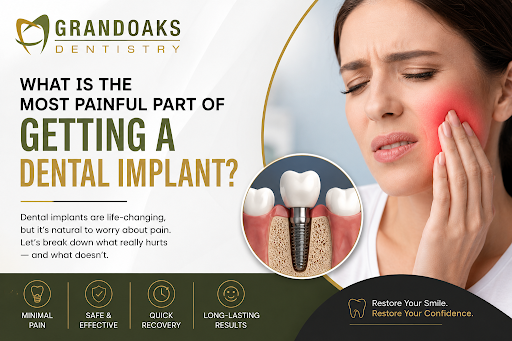

Dental implants are often associated with fear of pain. Many people picture surgery as the hardest part, but that is not usually how patients describe the process. Implant placement is completed with local anesthesia, so you should not feel sharp pain during the procedure. For most people, the more uncomfortable stage begins after the numbness fades and the body starts its normal healing response.
At Grand Oaks Dentistry, patients are encouraged to ask direct questions before making an implant decision.
What Is the Most Painful Part of Getting a Dental Implant? Usually the First Few Days of Healing
For many patients, the most uncomfortable period is the first 24 to 72 hours after implant surgery. During this time, mild to moderate soreness, gum tenderness, swelling, light bruising, or minor bleeding can occur. The dentist has prepared the gum and jawbone to hold the implant post, so some inflammation is expected while tissues begin to heal.
The experience differs from person to person. A single, straightforward implant usually causes less discomfort than a case involving an extraction, bone graft, sinus lift, or several implants.
“Painful” does not have to mean unbearable. Many people manage the first few days with their dentist’s pain-relief plan, rest, soft foods, and careful oral hygiene. Your dentist should explain what is normal for your procedure and which medications are appropriate for you.
The Implant Placement Itself Is Typically Not the Most Painful Stage
During the surgical appointment, local anesthetic numbs the treatment area. You may feel pressure, vibration, or movement, but you should not feel sharp pain.
Once numbness wears off, the area may feel sore or tender. This is often when patients notice discomfort most clearly. Still, it is commonly manageable when they follow their aftercare instructions. Taking medication only as directed, using a cold compress when recommended, eating softer foods, and avoiding strenuous activity can make the first days easier.
The implant post also needs time to integrate with the jawbone, a process called osseointegration. Bone and gum tissues need time to heal before the final restoration is placed.
Factors That Can Make Implant Recovery Feel More Uncomfortable
Not every implant journey looks the same. Several factors can influence soreness and recovery:
- Additional procedures: An extraction, bone graft, or sinus lift can add to tenderness because more tissue has been treated.
- Existing infection or inflammation: A painful or infected tooth can require a more complex plan.
- General health and healing: Conditions such as uncontrolled diabetes and tobacco use can slow healing, so your medical history matters.
- Oral hygiene and aftercare: Keeping the area clean exactly as directed supports recovery.
- Grinding or clenching: Excess bite pressure may stress the implant site or surrounding teeth.
- Anxiety: Worry can make sensations feel stronger. Clear expectations and a calm treatment environment can make a real difference.
This is why a careful consultation matters. Rather than treating every missing tooth the same way, a dentist should evaluate bone level, gum health, bite, medical history, and cosmetic goals before recommending an implant.
How to Manage Dental Implant Discomfort Safely?
The goal after implant surgery is not to “push through” worsening pain. It is to support healing and contact the dental office when something does not feel right. Follow the instructions you receive after surgery, because they are tailored to the procedure you had.
Patients may be advised to rest, use cold compresses during early recovery, eat soft and nutritious foods, and avoid smoking. Do not brush aggressively around the surgical site or skip follow-up appointments. Your dentist will tell you when to resume normal brushing, flossing, chewing, and exercise.
For many forms of dental pain, non-opioid options such as ibuprofen or acetaminophen may be effective. However, the right choice depends on your health conditions, medicines, allergies, and your dentist’s guidance. Never self-medicate beyond prescribed or recommended directions.
When Pain After an Implant Is Not Normal?
Some tenderness is expected, but pain should improve rather than intensify as the days pass. Contact your dentist promptly for severe or increasing pain, worsening swelling, persistent bleeding, fever, pus, a loose implant, numbness that lasts longer than expected, or trouble swallowing or breathing. These symptoms may need timely evaluation.
Do not ignore discomfort that begins months or years after an implant has healed. A painful or loose implant needs professional assessment. Regular cleanings, examinations, and home care help protect the implant and gums around it.
Patient-First Implant Planning Makes a Difference
Our office is a private dental practice owned and operated by a dentist—not a corporation. Our focus is patient care, not business profits. That approach matters because a missing tooth can have several possible solutions. Every patient deserves clear information about benefits, limits, timing, and alternatives before choosing treatment.
People searching for a Dentist in South Austin should look for an office that takes time to understand the whole picture, rather than focusing only on the implant procedure. A thorough exam helps determine whether an implant, bridge, partial denture, or another option best supports your health and smile.
Some patients also want to improve the appearance of nearby teeth as part of a larger smile plan. For people researching the best cosmetic dentist in South Austin, it is useful to ask how implant color, shape, and placement will blend with surrounding teeth. Teeth Whitening in South Austin may be planned before the final implant crown is made, helping create a more consistent shade across the smile.
Final Thoughts: The Discomfort Is Temporary, but Preparation Matters
The most painful part of getting a dental implant is usually the short recovery period after surgery, not implant placement itself. With proper numbing, a personalized aftercare plan, and prompt attention to warning signs, most patients can move through recovery with manageable discomfort. A consultation can clarify what your procedure may involve, how to prepare, and what to expect during recovery.
FAQs: What Is the Most Painful Part of Getting a Dental Implant?
Is getting a dental implant painful?
Most patients do not feel sharp pain during dental implant placement because the treatment area is numbed with local anesthesia. You may notice pressure or vibration during the procedure. Mild soreness, swelling, and gum tenderness are more common after the numbness wears off.
What is the most painful day after a dental implant?
For many patients, the first two to three days after surgery are the most uncomfortable. During this period, the gums and surrounding tissues begin healing, which can cause soreness and swelling. Discomfort should gradually improve rather than become more severe.
Is a dental implant more painful than a tooth extraction?
The answer depends on the patient and treatment plan. A simple implant procedure may feel less uncomfortable than removing a severely infected or damaged tooth. However, an implant treatment involving extraction, bone grafting, or multiple implants may cause more temporary tenderness during recovery.
How long does pain last after a dental implant?
Most people begin feeling more comfortable within a few days and often return to normal routines within about a week. However, the implant continues to heal and integrate with the jawbone for several months. Every patient heals at a different pace.
What can I eat after dental implant surgery?
Soft foods are usually recommended during the early healing period. Options may include yogurt, smoothies, mashed potatoes, eggs, soup that is not too hot, oatmeal, and soft-cooked vegetables. Avoid hard, crunchy, sticky, or very hot foods until your dentist confirms that it is safe to return to your normal diet.
Can I go to work the day after getting a dental implant?
Many patients can return to light work the next day, especially after a simple implant procedure. However, it is best to avoid strenuous exercise, heavy lifting, and demanding activities for a few days. Patients who receive sedation, multiple implants, extractions, or bone grafting may need additional rest.
How do I know if dental implant pain is normal?
Mild soreness, swelling, slight bruising, and tenderness near the implant site can be part of normal recovery. You should contact your dentist if pain becomes severe, swelling gets worse, bleeding continues, you develop fever, notice pus, or feel that the implant is loose. These symptoms need prompt professional evaluation.
Can a dental implant hurt years later?
A healed dental implant should not cause ongoing pain. Pain that develops months or years later may be linked to gum inflammation, infection, bite pressure, teeth grinding, or another oral health concern. Do not ignore new discomfort around an implant. Schedule an examination so the cause can be identified early.
Do dental implants hurt when chewing?
After the implant and crown have fully healed, chewing should feel comfortable and natural. You may need to avoid chewing directly on the treated side during the initial healing period. Pain while chewing after recovery is not something to ignore and should be checked by a dentist.
Are dental implants worth the recovery process?
For many patients, dental implants are worth the temporary recovery because they function much like natural, permanent teeth. Unlike removable partial dentures, implants do not need to be taken out for cleaning and can provide greater comfort and stability for everyday chewing and speaking. They are also designed to last for many years with proper care. In addition, dental implants help preserve the jawbone by stimulating the bone, which may reduce bone loss and provide better support for neighboring teeth. The right treatment option depends on your oral health, bone support, budget, and individual goals, so a consultation with your dentist is essential.
