
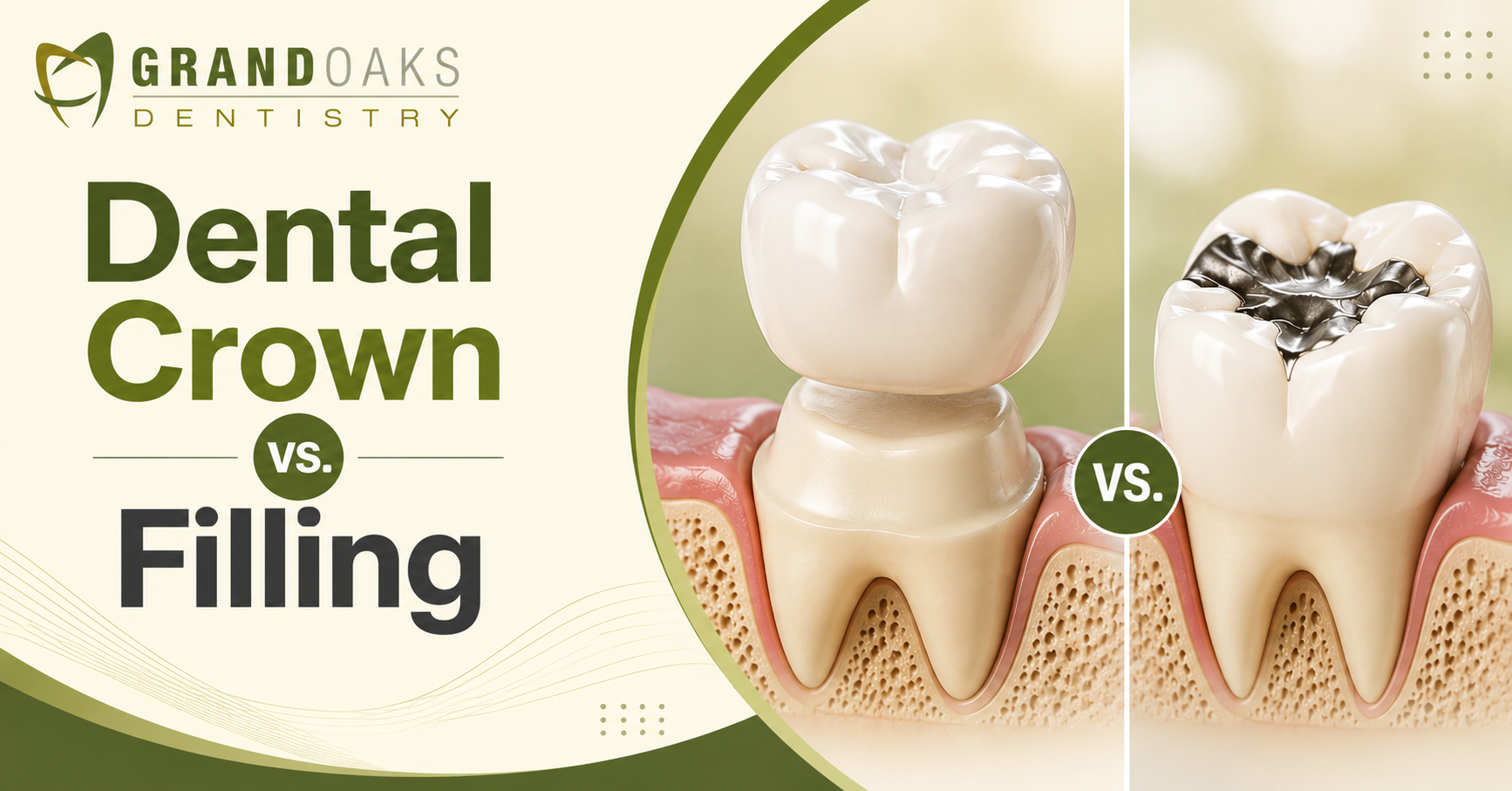
When a tooth becomes damaged due to decay, cracks, or wear, your dentist will recommend the most suitable treatment to restore its strength and function. A Dental Crown is often suggested for teeth that require extensive protection, while fillings are commonly used for smaller areas of damage. Understanding the difference between these two restorative treatments can help you make informed decisions about your oral health and long-term dental care.
Understanding Dental Crown vs. Filling Treatment Options
When comparing Dental Crown vs. Filling solutions, it is important to know that both treatments are designed to repair damaged teeth, but they serve different purposes. A filling restores a small portion of a tooth that has been affected by decay or minor damage. A dental crown, on the other hand, covers the entire visible portion of the tooth, providing greater strength and protection.
Dentists evaluate several factors before recommending the appropriate treatment. These include the extent of tooth damage, the location of the tooth, the amount of healthy tooth structure remaining, and the patient’s overall oral health goals.
When a Dental Crown Becomes the Better Choice?
A Dental Crown is typically recommended when a tooth has suffered significant damage that cannot be adequately repaired with a filling. Crowns are custom-made restorations designed to fit over the entire tooth, helping restore its shape, appearance, and functionality.
Common situations where a dental crown may be necessary include:
- Large cavities that compromise tooth strength
- Cracked or fractured teeth
- Teeth that have undergone root canal treatment
- Severely worn-down teeth
- Broken teeth that require structural reinforcement
Because crowns cover the entire tooth surface, they provide long-term durability and help prevent further damage.
How Dentists Decide Between a Dental Crown vs. Filling?
The decision between a Dental Crown vs. Filling is based on a thorough dental examination. Dentists assess the amount of healthy tooth structure that remains after removing decay or damaged areas.
If most of the natural tooth remains intact, a filling is often sufficient. However, when more than half of the tooth structure is compromised, a dental crown may offer better protection and longevity.
Modern dental imaging and diagnostic tools allow dentists to accurately determine the severity of damage and recommend the most effective treatment plan for each patient.
Signs Your Tooth May Need a Dental Crown
Many patients wonder whether their dental issue requires a crown or a filling. While only a professional examination can provide a definitive answer, several signs may indicate the need for a Dental Crown:
- Persistent tooth pain when chewing
- Large visible cracks or fractures
- Significant tooth decay
- Weak teeth after root canal therapy
- Repeated filling failures
- Extensive tooth wear from grinding
Addressing these issues promptly can prevent further complications and preserve your natural tooth for years to come.
Situations Where a Filling Is Usually Recommended
Fillings remain one of the most common restorative dental treatments because they effectively repair minor to moderate damage. Dentists generally recommend fillings when decay or damage affects a small portion of the tooth.
A filling may be the preferred option when:
- Cavities are detected early
- Tooth structure remains largely intact
- Minor chips or surface damage are present
- Cosmetic improvements are needed for small imperfections
Fillings are less invasive than crowns and usually require less preparation of the natural tooth.
Comparing the Durability of Dental Crown vs. Filling
One of the most important considerations when evaluating Dental Crown vs. Filling options is durability. While both restorations can last many years with proper care, crowns generally offer greater strength and protection.
Dental crowns are designed to withstand significant chewing forces and can often last between 10 to 15 years or longer. Fillings typically have a shorter lifespan depending on the material used, oral hygiene habits, and the size of the restoration.
The longevity of either treatment depends on maintaining good oral hygiene, attending regular dental checkups, and avoiding habits such as teeth grinding or chewing hard objects.
How Dental Crowns Protect Long-Term Oral Health?
A Dental Crown does more than restore a damaged tooth. It also helps maintain proper bite alignment, protects weakened teeth from fractures, and improves overall oral function.
When a tooth is extensively damaged, leaving it untreated or choosing a less protective restoration may increase the risk of future complications. Crowns provide comprehensive coverage that helps preserve the remaining tooth structure and supports long-term oral health.
At Grand Oaks Dentistry, patients receive personalized treatment recommendations based on detailed evaluations and individual dental needs to ensure the best possible outcomes.
Cost Considerations for Dental Crown vs. Filling Procedures
Cost often plays a role when deciding between a Dental Crown vs. Filling treatment. Fillings are generally less expensive because they require fewer materials and less chair time.
However, choosing a filling when a crown is truly needed may lead to additional repairs or replacements in the future. Dentists focus on recommending the treatment that offers the best balance of function, durability, and long-term value.
While crowns involve a higher initial investment, their ability to protect severely damaged teeth often makes them a cost-effective solution over time.
Why Professional Evaluation Is Essential Before Treatment?
Every tooth is unique, and no single treatment works for every situation. Professional evaluation allows dentists to identify underlying issues that may not be visible to patients.
Factors such as cavity depth, tooth location, bite pressure, previous restorations, and overall oral health all influence treatment recommendations. An experienced dental team can determine whether a filling will adequately restore the tooth or if a dental crown is necessary for lasting protection.
Patients seeking expert restorative dental care can benefit from comprehensive assessments and personalized guidance provided by Grand Oaks Dentistry.
Conclusion
Understanding the differences between a Dental Crown vs. Filling can help you make informed decisions about your dental care. While fillings are ideal for minor to moderate damage, a Dental Crown offers superior protection for teeth that have been significantly weakened or compromised. The best treatment depends on the condition of the tooth, the amount of remaining healthy structure, and your long-term oral health goals. Consulting with a qualified dentist ensures you receive the most appropriate solution to restore both the health and function of your smile.
Frequently Asked Questions
1. What is the main difference between a dental crown and a filling?
A filling repairs a small damaged portion of a tooth, while a dental crown covers the entire visible tooth to provide greater protection and strength.
2. Can a filling be replaced with a dental crown later?
Yes. If a tooth with a filling becomes weakened, cracked, or experiences further decay, a dentist may recommend replacing the filling with a dental crown.
3. How long does a dental crown typically last?
With proper care and regular dental visits, a dental crown can often last between 10 and 15 years or even longer.
4. Is getting a dental crown more painful than a filling?
Both procedures are typically performed using local anesthesia to ensure patient comfort. Most patients experience minimal discomfort during treatment.
5. How does a dentist determine whether I need a crown or a filling?
Dentists evaluate the extent of tooth damage, remaining tooth structure, bite forces, and overall oral health before recommending the most suitable treatment.