
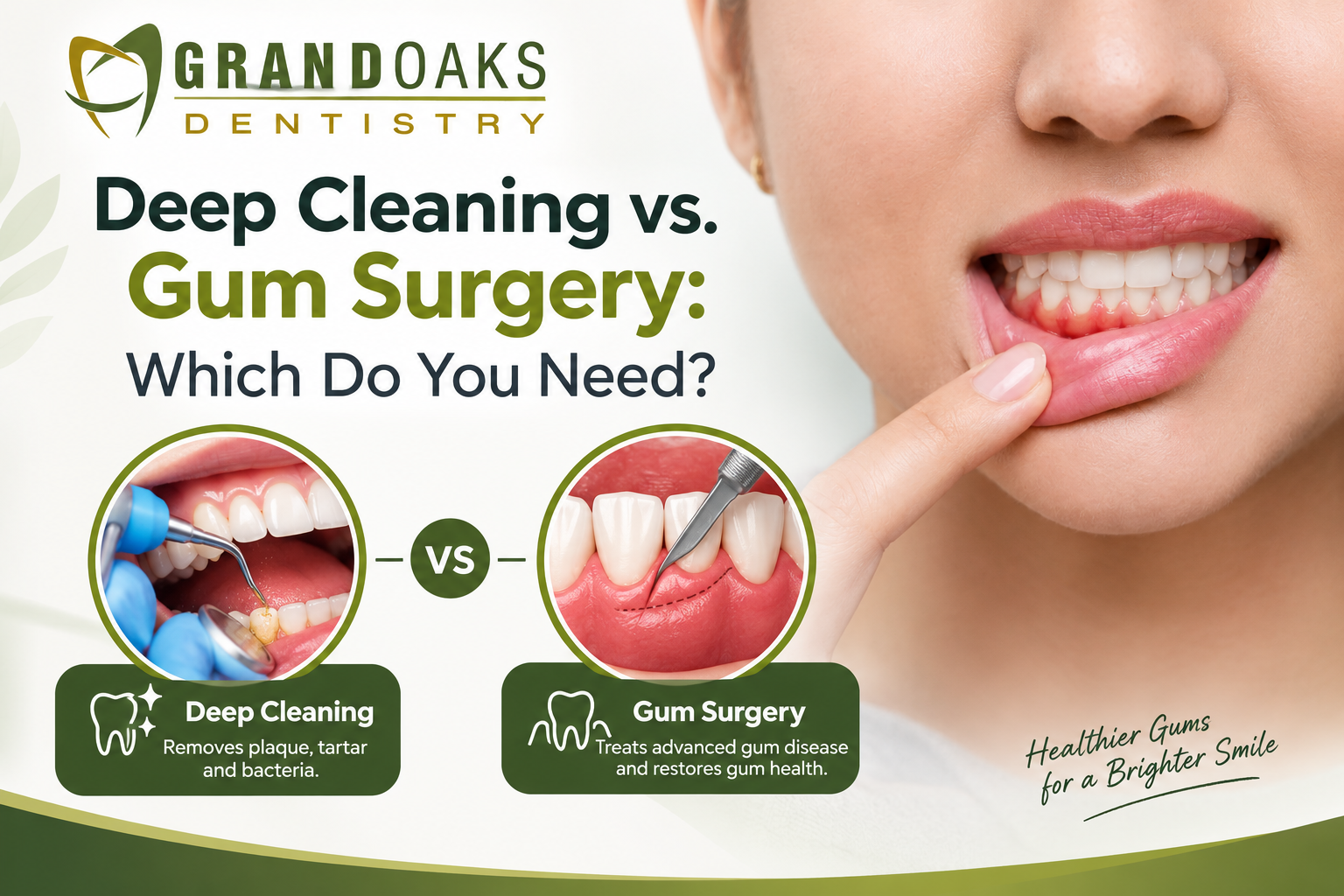
When gum disease progresses beyond mild inflammation, treatment may involve more than a routine dental cleaning. Understanding Deep Cleaning vs. Gum Surgery can help you know what these procedures are designed to address and why your dentist may recommend one over the other. The right treatment depends on factors such as gum pocket depth, inflammation, bone loss, tartar buildup, and how your gums respond to initial treatment.
Gum disease is not always painful, so visible symptoms alone cannot determine how advanced the condition is. A dental examination, periodontal measurements, and sometimes X-rays are needed to assess the health of the gums and supporting bone.
For patients in Austin, understanding these treatment options can make conversations with their dental team much easier. Grand Oaks Dentistry has served the Austin community from the same location for more than 12 years, providing continuity of care and long-term monitoring of patients’ oral health.
What Is the Difference Between Deep Cleaning and Surgery?
Deep cleaning and gum surgery both aim to control periodontal disease, but they are used at different stages and involve different approaches.
A deep cleaning, medically called scaling and root planing, is a nonsurgical treatment. It removes plaque and hardened tartar from below the gumline and smooths the tooth root surfaces so bacteria have fewer rough areas where they can accumulate.
Gum surgery is a more advanced treatment option. It may be considered when periodontal disease has progressed or when nonsurgical treatment does not adequately control the infection. Depending on the condition, surgical procedures can address diseased tissue, difficult-to-clean areas, or damage involving the gums and supporting structures.
| Treatment | Deep Cleaning | Gum Surgery |
|---|---|---|
| Approach | Nonsurgical | Surgical |
| Common purpose | Remove buildup below gumline | Treat advanced periodontal problems |
| Treatment area | Teeth and root surfaces | Gums and affected supporting structures |
| Typical use | Mild to moderate periodontal problems | Selected advanced or persistent cases |
| Recovery | Generally less involved | Requires postoperative healing |
| Follow-up | Periodontal maintenance may be needed | Ongoing periodontal care is important |
The table provides a general comparison. Your dentist determines the appropriate treatment after evaluating your individual periodontal condition.
When Is Gum Deep Cleaning Treatment Recommended?
GUM Deep Cleaning Treatment is commonly recommended when plaque and tartar have accumulated below the gumline and contributed to periodontal inflammation.
Unlike ordinary preventive cleaning, scaling and root planing targets areas that are difficult to reach with regular brushing and flossing. The procedure focuses on removing deposits from tooth surfaces and smoothing the roots.
A dentist may consider deep cleaning when you have signs such as:
- Bleeding or swollen gums
- Persistent gum inflammation
- Tartar buildup below the gumline
- Periodontal pockets deeper than expected
- Persistent bad breath associated with gum disease
- Gum recession
- Early or moderate periodontal disease
Deep cleaning does not mean that surgery will automatically be necessary later. Many patients can maintain periodontal health after scaling and root planing when treatment is effective and they follow a consistent home-care and maintenance plan.
How Does Deep Cleaning Treat Gum Disease?
Understanding what happens during treatment can make the process less confusing.
Scaling Removes Plaque and Hardened Tartar
During scaling, dental professionals remove plaque, tartar, and bacterial deposits from tooth surfaces, including areas below the gumline.
Tartar cannot be removed effectively through brushing and flossing alone. Professional treatment is required when hardened deposits have accumulated.
Root Planing Smooths the Tooth Surfaces
Root planing focuses on the root surfaces exposed to bacterial buildup. Smoothing these areas helps create a cleaner environment around the teeth and makes it more difficult for harmful deposits to remain attached.
The goal is to reduce inflammation and help the gums become healthier as part of a broader periodontal treatment plan.
When Might Gum Surgery Be Necessary?
Gum surgery is generally considered when periodontal disease is more advanced or when nonsurgical treatment has not produced the desired periodontal response.
Advanced periodontitis can involve destruction of the tissues and bone supporting the teeth. In such situations, deep cleaning alone may not address every affected area.
A dental professional may discuss surgical treatment when there are:
- Persistent deep periodontal pockets
- Significant inflammation that remains after nonsurgical treatment
- Areas that are difficult to access with deep cleaning
- Bone loss associated with periodontitis
- Gum or tissue defects requiring surgical management
- Continued periodontal infection despite appropriate nonsurgical care
The need for surgery cannot be determined simply by looking at the gums in a mirror. Periodontal measurements and, when appropriate, dental X-rays help the dental team understand what is happening beneath the gumline.
Deep Cleaning vs. Gum Surgery: How Is It Decided?
The decision is based on the condition of your gums and supporting structures rather than on symptoms alone.
Your dentist may first evaluate gum pocket depths around individual teeth. Healthy periodontal pockets are generally around 1–3 millimeters, while deeper pockets can indicate periodontal disease. X-rays may also reveal bone loss that cannot be seen during a routine visual examination.
Your dentist may consider:
Severity of gum disease: Gingivitis is generally reversible, while periodontitis involves damage to supporting tissues and requires professional management.
Pocket depth: Deeper periodontal pockets can make it harder to remove bacteria and tartar through routine home care.
Bone loss: Bone loss can indicate more advanced periodontal disease and may influence the treatment approach.
Response to deep cleaning: If periodontal health improves after scaling and root planing, continued nonsurgical maintenance may be appropriate. If problematic areas remain, additional treatment may be discussed.
Overall oral health: Smoking, diabetes, oral hygiene, medications, and other factors can affect gum health and treatment outcomes.
What Happens After Gum Disease Treatment?
Treatment does not end when the procedure is completed.
Periodontal disease can require ongoing maintenance because plaque continues to form on teeth every day. Brushing twice daily, cleaning between the teeth, attending recommended professional appointments, and following your dentist’s instructions are important parts of maintaining gum health.
Some patients may also need periodontal maintenance appointments at intervals recommended by their dental professional.
If you smoke or use tobacco, quitting can also support gum healing and improve periodontal treatment outcomes.
Is Deep Cleaning the Best Gum Disease Treatment?
There is no single BEST Gum Disease Treatment for every patient because periodontal disease can range from mild gum inflammation to advanced infection involving bone loss.
For early gum disease, improved daily oral hygiene and professional cleaning may be sufficient. For periodontal disease, scaling and root planing is an important nonsurgical treatment. In more advanced cases, surgical treatment may be considered.
This is why treatment should be based on a professional evaluation rather than choosing a procedure based solely on cost, convenience, or symptoms.
A deep cleaning may be appropriate for one patient while another may need additional periodontal treatment. In some cases, a patient may receive nonsurgical treatment first and then be reassessed before any decision about surgery is made.
Why Early Evaluation Can Make a Difference?
Gum disease can develop without obvious pain. Redness, bleeding, swelling, gum recession, bad breath, loose teeth, or changes in how teeth fit together can all be warning signs worth discussing with a dentist.
Early evaluation allows your dental team to identify periodontal problems before they become more difficult to manage.
Periodontitis can damage the tissues and bone that support the teeth, and advanced disease can contribute to tooth loss. Professional treatment can help manage the condition and slow its progression.
Why Choose Grand Oaks Dentistry for Gum Care?
For more than 12 years, Grand Oaks Dentistry has served patients in Austin from the same location with the same dedicated dentist. This continuity allows the dental team to become familiar with a patient’s dental history, preferences, and changes in oral health over time.
Long-term dental care can also make it easier to monitor periodontal health and identify changes between visits.
Instead of assuming that you need either deep cleaning or surgery, a professional evaluation can help determine what your gums actually need.
FAQs About Deep Cleaning and Gum Surgery
1. Is deep cleaning the same as regular dental cleaning?
No. Regular cleaning generally focuses on removing plaque and tartar from accessible tooth surfaces. Deep cleaning, or scaling and root planing, targets deposits below the gumline and along affected root surfaces.
2. Does everyone with gum disease need gum surgery?
No. Treatment depends on the severity of the periodontal condition. Many patients can be treated with nonsurgical periodontal therapy, while advanced or persistent cases may require surgical treatment.
3. How do I know if I need a deep cleaning?
Bleeding gums, swelling, tartar buildup, gum recession, persistent bad breath, or deeper periodontal pockets can indicate that additional evaluation is needed. A dentist must examine your gums and determine whether scaling and root planing is appropriate.
4. Can gum disease be treated without surgery?
In many cases, yes. Nonsurgical treatment such as scaling and root planing can be used to manage periodontal disease. However, some advanced cases may require additional surgical treatment.
5. What should I do if my gums bleed when I brush?
Regular gum bleeding should not simply be ignored. It can be associated with gum inflammation or periodontal disease. Schedule a dental evaluation so the cause can be identified and an appropriate treatment plan can be recommended.
Take the Next Step Toward Healthier Gums
Choosing between deep cleaning and gum surgery is not a decision you should have to make on your own. The appropriate approach depends on the condition of your gums, periodontal pocket measurements, supporting bone, and your response to treatment.
If you are experiencing bleeding gums, swelling, persistent bad breath, gum recession, or other concerns, contact Grand Oaks Dentistry to schedule an evaluation. A personalized assessment can help identify the condition of your gums and determine whether deep cleaning, periodontal maintenance, or another treatment approach is appropriate for your needs.